

Riparian Plants
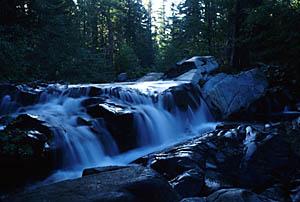
Riparian - "of, pertaining to, or situated or dwelling on the bank of a river or other body of water"
The riparian corridor is one of the most fertile habitats in California. The towering trees offer shade to cool the water below and food and nesting sites for birds. The understory supports a diverse community of land mammals, insects and amphibians. And the streams supply water for all as well as habitat for fish and other aquatic creatures. When planting your streambank it's nice to keep this community in mind and indulge in a diversity of plants. This will also help to ensure the eventual success as you discover that some selections do better than others.
Planting along a riparian corridor necessitates choosing plants with different drought tolerances. Those plants closest to the water flow must often be able to withstand seasonal flooding while plants at the highest points of the bank are often droughted in the late summer and fall. Generally all of the plants must be happy growing with at least some shade. And erosion control along the bank sides is an important element in selecting your planting material. All of these factors should be considered when choosing your plants.


