

Seaside Planting
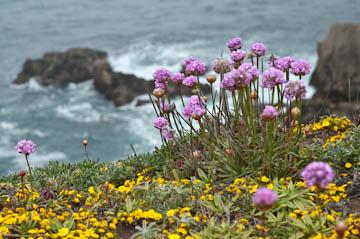
(Photo: Armeria maritima californica) Planting near the ocean influences requires attention to the elements of both drying winds and salts. The winds draw moisture from the leaves and the salts, deposited in the soil surrounding the plants, can draw moisture from the roots. Seaside plants have adapted in various ways to overcome these adversities.
It is always a good idea to start with small sized plants, they adjust to the harsh conditions more quickly than larger specimens. They will ultimately become more drought tolerant and often larger as they have developed a root system adequate to their needs. Mulching the plants can also help to retain moisture in the soil, particularly during the spring winds when plants are also trying to grow. If you do mulch however keep the base of the plant open to avoid crown rot and pick a mulch that won't blow away if it's a windy spot.
Appropriate plants can be recruited from not only the coastal California zones but also Australia, western South America and the coastal Mediterranean region. If there's a range of heights you can be pretty sure your plants will be on the shorter side. If deer are a problem in you area Australian plants in particular seem more resistant to being eaten. And experiment! Become your own expert, that's the fun of gardening.


